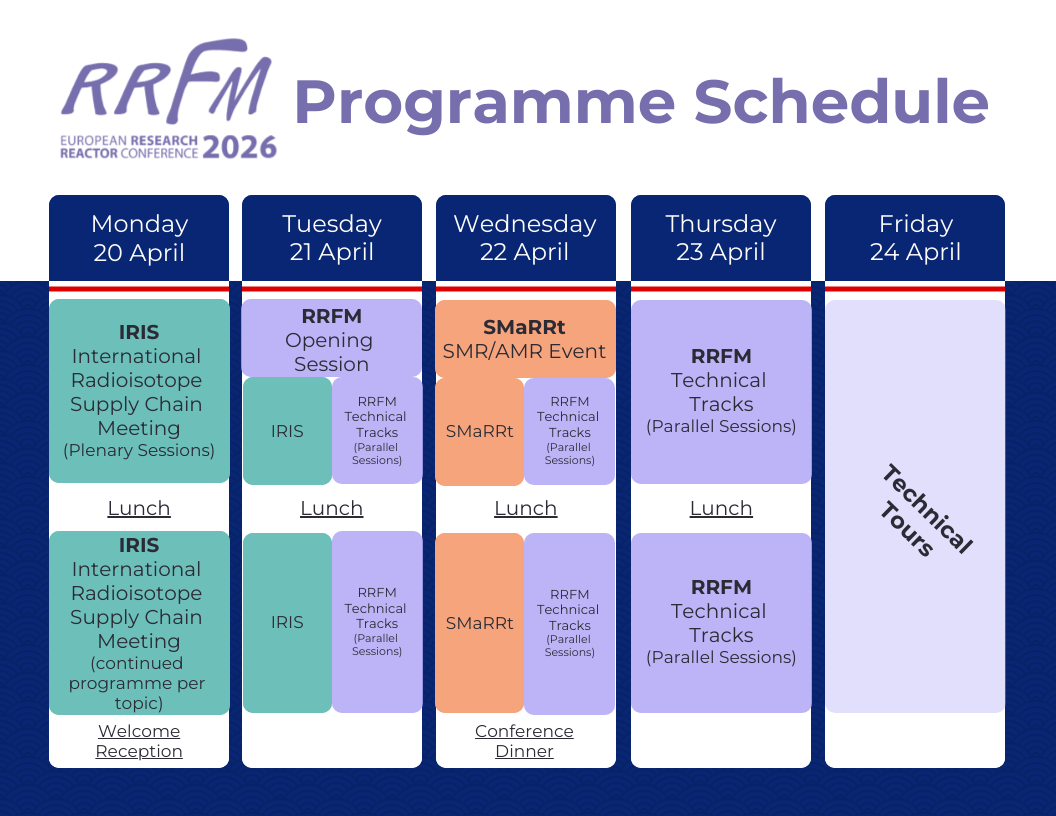
IRIS is a side meeting of the European Research Reactor Conference (RRFM) 2026.
Participants may choose to register exclusively for IRIS
Target Audience
-
Radioisotope producers
-
R&D organisations, Universities
-
Pharma and CMOs
-
Infrastructure and equipment suppliers
-
Scientific and industrial isotope users
-
Regulators and health authorities
-
Policy and decision makers
-
Programme
The preliminary programme of IRIS 2026 is now online! Click the button below
Keynotes will set the stage for each topic, sparking dialogue and framing the challenges ahead.
Accepted contributions from the Call for Papers will continue the conversation—sharing insights, practical solutions, and forward-looking developments from across the radioisotope value chain.
Join us and be part of the exchange!
Keynote Speakers
Join our keynote speakers for a rich and dynamic exchange across the radioisotope community!
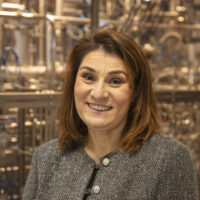
Linda
Ashton
Head of Department – Isotopes
Urenco

Stephanie
Barron
Nuclear Power Engineer | Energy Storage Section, TEC-EPB
European Space Agency

Laurent
Bigot
SVP Strategy Orano CE
Orano

Tor
Bjørnstad
Professor Emeritus
University of Oslo

Jean-Michel
Geets
Domain Principal Expert
IBA RadioPharma Solutions
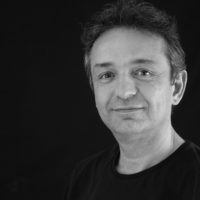
Ferid
Haddad
Director
GIP Arronax

Ulli
Köster
Research Scientist
Institut Laue-Langevin – ILL

Nicolas
Mario
Head of Market & Supply – Nuclear Medicine
NucAdvisor

Neil
Quigley
Team Leader & Senior Global Product Manager
ITM Radiopharma

Hans
Van de Maele
Business Development Manager for Radiopharma
PHSE

Nicholas P.
van der Meulen
Group Leader: Radionuclide Development
Paul Scherrer Institut

Sven
Van den Berghe
CEO
PANTERA
Sponsors
Gold Sponsors

The development of the Programme is supported by the IRIS Experts Committee
|
Name |
Affiliation |
Country |
|
Steven van Dyck |
SCK CEN |
Belgium |
| Antonia Denkova |
TU Delft |
The Netherlands |
| Sandra Barithel |
Orano |
France |
| Bertrand Stepnik |
Framatome |
France |
| Jerome Estrade |
ILL |
France |
| Nick Van Der Meulen |
Paul Scherrer Institut |
Switzerland |
| Remigiusz Baranczyk |
Euratom Supply Agency |
International |
| Sven Van den Berghe |
Pantera |
Belgium |
| Zeynep Talip |
Paul Scherrer Institut |
Switzerland |
| Ronald Schram |
NRG | Pallas |
The Netherlands |
| Liv Stavestra |
IFE |
Norway |
| Tor Bjørnstad |
University of Oslo |
Norway |
Registration
Registration Closed
The event has now reached full capacity. Registration is currently closed, and it is no longer possible to sign up.
IRIS Registration Fee:
- Single fee: 500€ (ex. VAT)
Included:
- 2-day conference
- Coffee breaks and lunch breaks
- Evening reception
If you are also interested in joining RRFM2026 and/or SMaRRt, please check the registration fees here.
Info Point
The International Radioisotope Supply Chain Meeting – IRIS 2026 – Venue
The International Radioisotope Supply Chain Meeting – IRIS 2026 will take place in the Hilton Garden Inn Leiden.
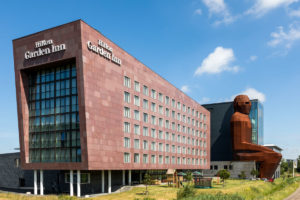
Willem Einthovenstraat 3
Oegstgeest, 2342 BH, Netherlands
The Leiden Hilton Garden Inn is located just 15 minutes by bus from Leiden city centre and central station (see Google Maps).
Shuttle buses will be organised each day before and after the conference sessions. In addition, there are several regular bus lines which connect Leiden city centre to the Hilton Garden Inn via the stop Corpus in Oegstgeest: lines 30, 31 and 183. See here for more information.
GETTING THERE
Amsterdam Airport Schiphol is just 15 minutes from Leiden by direct train (see Google Maps). Leiden Central Station is one of the ten largest in the Netherlands and offers convenient connections to high-speed rail services to Belgium, France, Germany, and the United Kingdom. The city is also ideally situated between the A4 and A44 motorways, providing easy access to international road networks across mainland Europe and the UK via North Sea ferry connections.
Leiden, the City of Science
Leiden is a historic and vibrant city known for its rich scientific and cultural heritage. Home to the Netherlands’ oldest university and the country’s largest life sciences cluster, the Leiden Bio Science Park, the city is a hub for innovation and research. With its charming canals, centuries-old monuments, and world-class museums, Leiden offers a unique setting for international conferences and is among the top five congress destinations in the Netherlands.
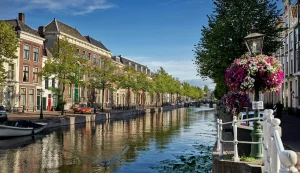
Rapenburg, ©Kees Hummel
VISA
Citizens from countries outside of the Schengen area might need a visa to enter the Netherlands.
Upon request, the European Nuclear Society will prepare a visa invitation letter for delegates whose registration fees have been received in full. Unfortunately, we are not in a position to give any further support to the visa application process. Obtaining a visa remains the sole responsibility of the participant. Regular cancellation deadlines apply, regardless of whether your visa was granted or not.
ORGANISER
European Nuclear Society
Avenue des Arts 56
1000 Brussels
Belgium
Email: conferences@euronuclear.org
Call for Papers
The IRIS Meeting offers a platform for professionals and organisations working at every stage of the radioisotope value chain to share insights, practical solutions, and forward-looking developments. The goal is to foster exchange between those advancing isotope production technologies and those applying isotopes in medicine, industry, science, and beyond.
We encourage contributions from organisations and individuals engaged in isotope R&D, separation, production, processing, infrastructure development, logistics, regulatory oversight, policy making and end-use applications — across both public and private sectors. Whether your work supports the supply chain of emerging radionuclides for cancer treatment, established industrial sources like iridium-192 and cobalt-60, or advanced reactor and accelerator techniques, IRIS aims to capture your expertise.
We also encourage submissions highlighting the use of radioisotopes in industrial applications such as radiography (e.g. Ir-192, Co-60), gauging and process control (e.g. Cs-137, Am-241), sterilization, radiotracing, well logging, and environmental monitoring. Contributions from equipment manufacturers, service providers, and end-users are welcome—especially those addressing production challenges, logistics, regulatory aspects, or case studies that illustrate the impact and evolving needs of industrial and environmental radioisotope use.
Submissions are encouraged on the following topics:
Targets and Target Management
- Target manufacturing and materials science
- Target design for reactor or accelerator irradiation
- Target stations and handling systems
- Stable isotope production for target enrichment
- Target degradation, recycling, and waste treatment
Separation Chemistry and Processing
- Radiochemical separation techniques:
- Liquid-liquid extraction
- HPLC, ion-exchange, and chromatography
- Isotope enrichment and separation methods:
- ISOL, EMIS, AVLIS, molecular laser separation
- Scaling and automation of processing methods
- Radiopurity and impact on downstream applications
Irradiation Platforms: Reactors and Accelerators
- Neutron activation in research or power reactors
- Fission-based isotope production (e.g. Mo‑99)
- Cyclotron irradiation techniques and targetry
- Photonuclear and spallation methods
- Multi-purpose irradiation facilities and scheduling models
- Ion accelerators
Logistics and Transport
- Transport of sealed and unsealed radioactive sources
- Generator systems (e.g. Ge‑68/Ga‑68, W‑188/Re‑188) for decentralised production
- Container design, shielding, and compliance
- Customs clearance and international regulatory frameworks
- Coordination of multi-national supply chains (just-in-time logistics)
Innovation in Infrastructure
- Hot cell technologies and facility layout
- Equipment for automation of radiochemical separation
Innovation and industrial applications
- RTG
- labelling
- etc …
Mark your diaries and be a part of it! Upload your abstracts before 28 November 2025.
INSTRUCTIONS AND DEADLINES
| Next steps |
Deadlines |
| Abstract Submission |
28 November 2025 |
| Author Notification |
18 December 2025 |
| Full Paper Submission |
13 March 2026 |
| PowerPoint Presentation due | 10 April 2026 |
| IRIS 2026 in Leiden | 20 – 21 April 2026 |
For abstract submission, please go to the IRIS 2026 Online Abstract Submission System
IRIS is an ENS conference
developed with the support of the ENS Corporate Members