Welcome to RRFM 2026

The European Research Reactor Conference 


 RRFM is the annual meeting point for Europe’s research reactor community, bringing together experts, operators, scientists, regulators, and industry leaders from around the world.

In 2026, we are pleased to welcome you to Leiden, The Netherlands, from 20 to 24 April. 

The conference programme will feature high-level Plenary Sessions and a series of parallel Technical Sessions covering a broad range of topics related to research reactor technology, utilisation, safety, and management. 

 To enrich the experience, RRFM 2026 will offer three technical visits to leading nuclear facilities in the region: 

– NRG PALLAS site in Petten

– TU Delft Reactor Institute

– URENCO enrichment facility in Almelo 

 In addition, two dedicated meetings will take place during RRFM 2026: 

  • IRIS – the International Radioisotope Supply Chain Meeting, a new global forum for the radioisotope production community to share progress, address challenges, and strengthen supply chains. 


  • SMaRRt, a meeting focused on building bridges between SMR/AMR developers and the research reactor community to accelerate innovation through collaboration and shared expertise. 


Join us in Leiden to exchange knowledge, connect with peers, and explore cutting-edge advances in the field of research reactors! 

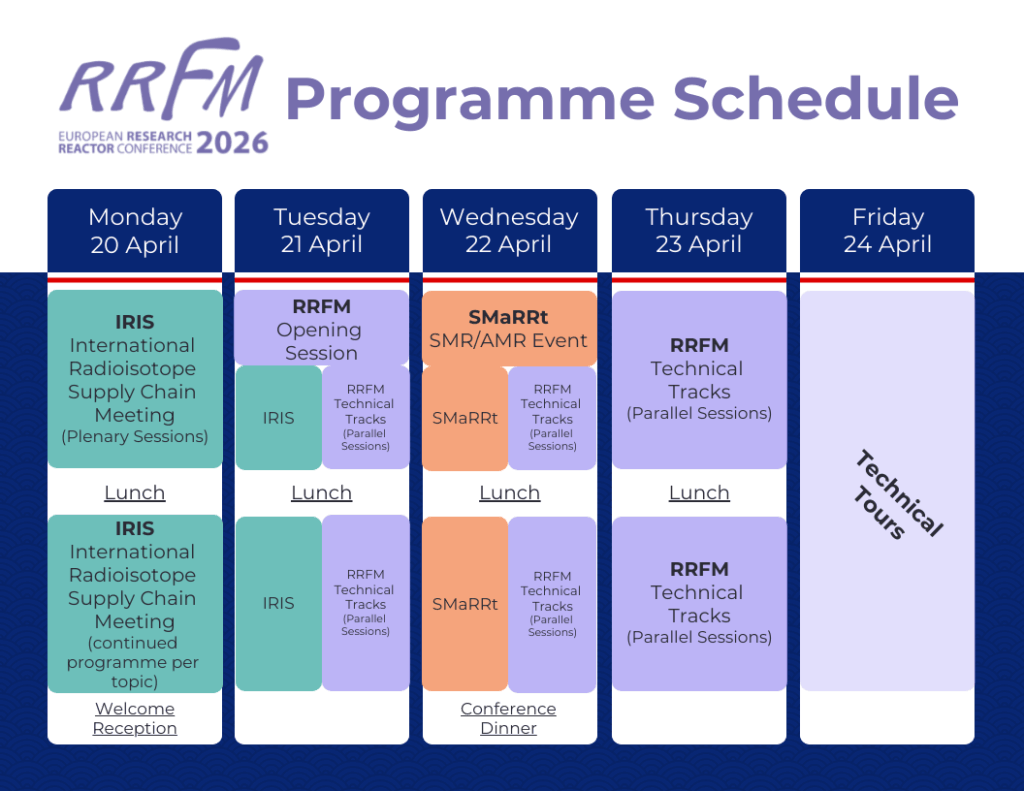
Programme

The programme of RRFM 2026 will be published in early 2026.  

STAY INFORMED

Click here to be added to the mailing list of the European Research Reactor Conference (RRFM)

Technical Tours

On Friday 24 April 2026 delegates of the Research Reactor Conference (RRFM) 2026 will have the opportunity to participate in three technical tours: 

Technical Tour I – NRG PALLAS site in Petten

nrg

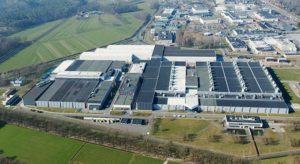
The NRG|PALLAS site in Petten is one of Europe’s foremost nuclear research centres, hosting the High Flux Reactor and advanced laboratories for materials research and radioisotope production. It plays a key role in supplying medical isotopes, supporting nuclear fuel and materials testing, and developing next-generation reactor technologies through the upcoming PALLAS Reactor.
Participants can choose between three expert-led visits:
  • The High Flux Reactor, one of the world’s most powerful research reactors and a global leader in medical isotope production and materials irradiation;
  • The Hot Cell laboratories, material research location, and radioisotope unpacking and dispatching, where state-of-the-art material research and isotope handling are carried out;
  • The construction site of the PALLAS Reactor, a facility designed to secure Europe’s future isotope supply and support research on fuels, materials, and reactor systems for next-generation nuclear technologies, including SMRs and medical applications.


Technical Tour II – URENCO enrichment facility in Almelo
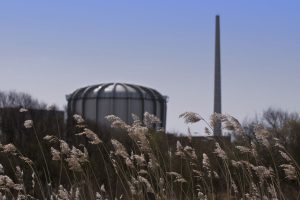
Urenco Almelo Site

Urenco is a global supplier of uranium enrichment services and fuel cycle products for power generation.

This guided tour will follow a fixed route through key areas of the site, offering exclusive insights into the uranium enrichment process. Highlights of the visit include:

  • A look inside the control room,
  • The cylinder transport area,
  • The mass spectrometry room,
  • And a view of the centrifuge hall through a secure observation window.

Throughout the visit, informative animations will guide you through the technical aspects of enrichment, offering a deeper understanding of URENCO’s operations and its role in the nuclear fuel cycle.

Technical Tour III – TU Delft Reactor Institute

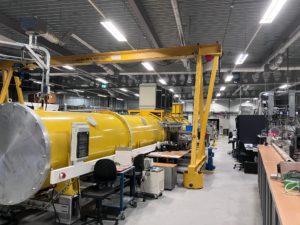
The Reactor Institute Delft (RID) operates a unique research facility: the HOR nuclear reactor. This is a small pool-type research reactor (2.3 MW). The core is composed of 20 fuel assemblies and 4 control assemblies. It is equipped on three sides with a row of Be-reflector assemblies acting as neutron reflectors. The reactor provides neutron radiation to a variety of facilities for radioisotope production and neutron activation analysis. It is also equipped with six horizontal beam-tubes in two sets of three at opposite sides of the core, mainly used for neutron scattering experiments. The two larger beam tubes are equipped with stacked-mirror neutron guides (neutron guide system) to obtain clean beams of thermal neutrons with low contamination by fast neutrons and gamma rays. One neutron guide system provides two beams for experiments in the reactor hall. The other neutron guide system provides 4 neutron beams to the experiment hall, adjacent to the reactor hall. Measuring 25 x 40 m, this hall provides ample space with a low radiation background for beam experiments. In 2024, a Cold Neutron Source is commissioned, providing cold neutrons to the experimental hall.

Finally, one of the beam-tubes is used by the source of variable-energy positrons (POSH), the positrons being generated by the hard gamma rays hitting the POSH target. These positrons are led into the experiment hall as well.

The tour will focus on the HOR and the research facilities in the experiment hall.

Registration

The three Technical Tours are included in the registration fee.

The maximum size of each group is limited and participation is on a first-come, first-served basis.

Please fill in the appropriate section of the registration form and the required information for the security check.

Registration

The registrations will open in January 2026

Please, check the calendar to plan your week in Leiden!

Fee structure (all ex. VAT)

RRFM Registration Fees

  • Regular: €950
  • Member: €820
  • University: €650

Included:

  • Conference sessions Tuesday–Thursday (including IRIS and SMaRRt sessions)
  • Technical tours on Friday (subject to availability)
  • Lunches, coffee breaks, evening reception, and conference dinner

Please note: Monday sessions are not included.

RRFM 5-day Registration Fees

  • Regular: €1050
  • Member: €920
  • University: €750

Included:

  • Access to all conference sessions Monday–Thursday (including IRIS on Monday and SMaRRt on Thursday)
  • Technical tours on Friday (subject to availability)
  • Lunches, coffee breaks, evening reception, and conference dinner

Participants may choose to register exclusively for IRIS


IRIS Registration Fee:

  • Single fee: 500€

Included:

  • 2-day conference
  • Coffee breaks and lunch breaks
  • Evening reception

Participants may choose to register exclusively for SMaRRt


SMaRRt: Advancing Innovation Registration Fees

  • 1-day conference: €250

Included:

  • Coffee breaks and lunch breaks
  • Dinner is available as an optional supplement

Info Point

The European Research Reactor Conference (RRFM) 2026 – Venue

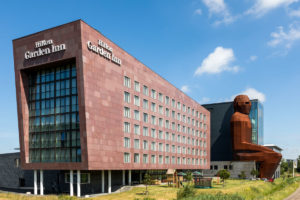
The Research Reactor Conference (RRFM) 2026 will take place in the Hilton Garden Inn Leiden.

Hilton Garden Inn 

Willem Einthovenstraat 3
Oegstgeest, 2342 BH, Netherlands 

The Leiden Hilton Garden Inn is located just 15 minutes from Leiden city centre and central station (see Google Maps).


GETTING THERE

Amsterdam Airport Schiphol is just 15 minutes from Leiden by direct train (see Google Maps). Leiden Central Station is one of the ten largest in the Netherlands and offers convenient connections to high-speed rail services to Belgium, France, Germany, and the United Kingdom. The city is also ideally situated between the A4 and A44 motorways, providing easy access to international road networks across mainland Europe and the UK via North Sea ferry connections.

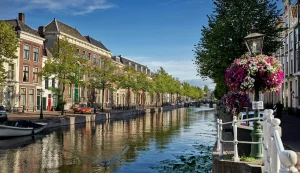
Leiden, the City of Science

Leiden is a historic and vibrant city known for its rich scientific and cultural heritage. Home to the Netherlands’ oldest university and the country’s largest life sciences cluster, the Leiden Bio Science Park, the city is a hub for innovation and research. With its charming canals, centuries-old monuments, and world-class museums, Leiden offers a unique setting for international conferences and is among the top five congress destinations in the Netherlands.

Rapenburg, ©Kees Hummel

VISA

Citizens from countries outside of the Schengen area might need a visa to enter the Netherlands.

Upon request, the European Nuclear Society will prepare a visa invitation letter for delegates whose registration fees have been received in full. Unfortunately, we are not in a position to give any further support to the visa application process. Obtaining a visa remains the sole responsibility of the participant. Regular cancellation deadlines apply, regardless of whether your visa was granted or not.

ORGANISER

European Nuclear Society

Avenue des Arts 56
1000 Brussels, Belgium
Email: conferences@euronuclear.org 

Call for Papers

The Research Reactor Conference (RRFM) 2026 is intended to include research reactors of all powers as well as critical and sub-critical facilities. 

The Programme Committee is calling for both oral and poster presentations on the following topics: 

  • Research reactor nuclear fuel cycle from front-end to back-end   conversion to LEU fuels; fissile material supply; fresh fuel and targets: origin, fuel development, qualification, fabrication; in-core fuel management and safety; fuel transportation; fuel and reactor licensing; fuel back-end management including treatment, conditioning and reprocessing, spent fuel storage, corrosion and degradation; fuel cycle optimisation.
  • Utilisation of research reactors – E&T programmes; nuclear science and technology including support for nuclear power programmes; neutron beam applications; industrial and medical applications, including radioisotopes production and irradiation/transmutation technology; strategic and business plans; networks and coalitions; synergies between research reactors and the development of nuclear power programmes and SMR/AMR.
  • Innovative methods in reactor physics and thermo-hydraulics – development and application of advanced computational methods and tools for core load management (operational and safety analysis, and fuel cycle physics); benchmark exercises; nuclear data improvements.
  • New research reactor projects – national/regional plans or construction updates; lessons learned from new research reactor projects – design, construction and start of operation; proliferation resistance; development of national infrastructure; design for decommissioning.
  • Research reactor operation & maintenance and ageing management – managing reliability issues (commissioning, early operation to end of life related issues); ageing management, modernisation, refurbishment; maintenance management systems; human resource development and training programmes.
  • Research reactor safety and security – implementation of updated international safety and security standards; application of graded approach to regulatory safety and security requirements; review of national regulatory requirements on safety and of licensing activities; periodic safety reviews; design review and upgrades including associated facilities (spent fuel storage facilities); safety analysis methods and approaches; safety of experiments and experimental devices; assessment of fire safety; management of the interface between nuclear safety and security; cyber security issues; review of emergency and contingency plans;
  • Decommissioning and dismantling of research reactors and waste management – strategies and concepts; radiological characterisation; decommissioning planning; economics and cost estimation; licensing; backend solutions for reflector and shielding materials; decontamination and measures to reduce radiation exposure; radiation and environmental protection; treatment, storage and disposal of radioactive waste; management of irradiated beryllium; logistics and transportation; on-going projects; D&D lessons learned.


Separate Calls for Papers will be issued for the two side meetings, IRIS and SMaRRt. Links to their individual websites will be shared shortly. 

 Mark your diaries and be a part of it! Upload your abstracts before 28 November 2025! 


INSTRUCTIONS AND DEADLINES 

Next steps

Deadlines

Abstract Submission

28 November 2025

Author Notification

18 December 2025

Full Paper Submission

13 March 2026

PowerPoint Presentation due 10 April 2026
RRFM 2026 in Leiden 20 – 24 April 2026

For abstract submission please go to the RRFM 2026 Online Abstract Submission System

IAEA Travel Grants

The International Atomic Energy Agency (IAEA) offers a limited number of travel grants, which contribute to meeting the grantee’s travel and accommodation expenses.

The grants aim to stimulate the attendance of selected professionals in the research reactor community who would have difficulties attending the European Research Reactor Conference (RRFM) 2026 without this assistance. The IAEA invites particularly young people to apply for a travel grant.

The criteria for selection are:

  • The candidate must be a national from an IAEA Member State eligible to receive assistance under the Agency’s Technical Co-operation
  • The candidate must present an oral paper or poster accepted by the Programme Committee

Priority will go to first-time applicants.

If you are interested in a travel grant, please fill in this Grant Application Form, and send it back via your official National authority (e.g. Ministry of Foreign Affairs, Permanent Mission to the IAEA, or National Atomic Energy Authority) of your country for subsequent transmission to the International Atomic Energy Agency (IAEA) either electronically by email to: Official.Mail@iaea.org or by fax to: +43 1 26007 (no hard copies needed).

Please also send a copy by email to the Scientific Secretary (P.Chakrov@iaea.org) and to the Administrative Secretary (R.Thottakkara@iaea.org).

IMPORTANT – This form should be returned through the official liaison offices with the IAEA by 31 December 2025 at the very latest.

Student Competition

Participate in the RRFM 2026 Student Competition! 

In 2026, the Research Reactor Conference (RRFM) Programme Committee will again organise a Student Competition.

The challenge

Participating PhD and Master’s Students will be invited to present a compelling spoken presentation of their research topic to the international Research Reactor Community during a Plenary Session of the Research Reactor Conference (RRFM) 2026.

Inspired by existing Three-Minute Thesis competitions, the presentation should compress the research topic into 180 seconds and communicate it to the international Research Reactor Community. The presentation can be accompanied by a maximum of three PowerPoint slides, but this is not compulsory.

This presentation should be complemented by a poster presentation, which will be on display for the entire duration of the conference, and which should be discussed with the audience during a dedicated Poster Session. The aim should therefore be to make the research topic clear and compelling and encourage the audience to continue the discussion during the Poster Session.

Who can participate?

All students of subjects relevant to the Research Reactor Community and who are working on research topics defined in the Call for Papers for the Research Reactor Conference (RRFM) 2026 are invited to apply for participation in the competition.

What are the next steps?

Interested students should submit their abstract text (approx. 400 words) in English through the RRFM 2026 Abstract Submission System by 28 November 2025 under the category ‘Student Competition’.

The Programme Committee of the Research Reactor Conference (RRFM) will select up to 10 researchers who will be given the opportunity to present their work to the international Research Reactor Community.

Participating students will follow the instructions for poster presentations and will prepare for their Three-Minute presentation in a Plenary Session.

A great recognition from the international Research Reactor Community!

RRFM delegates will get to vote for their favourite student presentation and award the ‘Audience Prize of the Research Reactor Conference (RRFM)’.

The quality of the research presented, as well as the accuracy and clarity of the presentation, will be the selection criteria at stake.

Financial support 

Participating students will benefit from a reduced registration fee of 300€ (excl. VAT)

European Research Reactor Conference is an ENS Conference