
The next edition of the NESTet Conference will take place in Brussels, from 2 to 4 March 2026.

NESTet is designed to facilitate an exchange of information, collaboration and the sharing of best practices in nuclear education and training in engineering science and technology. It is an important networking opportunity for better coordination and collaboration between different stakeholders.

The conference is targeted at all stakeholders responsible for human resources and skills development, and stakeholders responsible for the development of education and training programmes in the nuclear sector.


EVENT OVERVIEW

Want to know more about our previous editions?

Click here to get to the NESTet Proceedings.
Programme

The NESTet 2026 Programme will be published in January 2026.

The development of the Programme is supported by the NESTet Programme Committee


Name

Affiliation

Country

Gina Abdesalam

OECD NEA

International

Walter Ambrosini

University of Pisa

Italy

Stefan Cerba

Slovak University of Technology in Bratislava

Slovakia

Michèle Coeck

SCK CEN

Belgium

Christophe Demaziere

Chalmers University

Sweden

Pedro Dieguez Porras

International Atomic Energy Agency

International

Javier Dies

CNS

Spain

Margarida Goulart

European Commission

International

Tatiana Ivanova

OECD NEA

International

Jessica Johnson

nucleareurope

International

Gabriel Pavel

ENEN

International

Xavier Perrette

CEA

France

Csilla Pesznyak

Budapest Univ. of Technology and Economics

Hungary

Katarina Ptackova

European Commission

International

Christian Schönfelder

Schoenfelder Training

Germany

Joerg Starflinger

Universitaet Stuttgart

Germany

Iztok Tiselj

Jozef Stefan Institut

Slovenia

Jan Van der Lee

I2EN

France

Franck Wastin

EC Joint Research Centre

International

STAY INFORMED

Click here to be added to the mailing list of NESTet

Registration & Fees

Registrations will open in January 2026


Registration fees for NESTet 2026 (all rates excl. VAT)

Category

Rate

ENS Members

700 € *

Non-Members

800 €

Universities

600 €

Young Generation

250 €

* Members of ENS’ Member Societies are automatically members of ENS.

Info Point

NESTet 2026 – Venue

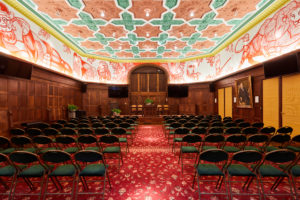
NESTet 2026 will take place at the Foundation Universitaire – Universitaire Stichting, Brussels, Belgium

Foundation Universitaire – Universitaire Stichting

11, Rue d’Egmont – Egmontstraat
1000, Brussels
Belgium

Getting there

Bordering the European Quarter, the Foundation Universitaire – Universitaire Stichting is located between the European Parliament and the Brussels Royal Palace (walking distance).
It is approx. 40 minutes from the Brussels International Airport and it is well connected to the main public transport lines (Metro stations – Trône/Troon or Porte de Namur/Naamsepoort | Train station – Brussels Luxembourg | Bus stop – Trône/Troon or Porte de Namur/Naamsepoort).

Brussels – The Capital of Europe

At the crossroads of Europe, Brussels combines a cosmopolitan spirit with a rich cultural heritage. From the grandeur of the Grand-Place to the charm of its Art Nouveau façades, the city offers a unique blend of tradition and modernity. Renowned for its gastronomy, vibrant districts, and welcoming atmosphere, Brussels is not only the capital of Belgium but also of the European Union. Perfectly connected and easily accessible, it’s the ideal setting to combine productive meetings with moments of discovery and relaxation.

VISA

Citizens from countries outside of the Schengen area might need a visa to enter Belgium. Check here if you need a visa.

Upon request, the European Nuclear Society will prepare a visa invitation letter for delegates whose registration fees have been received in full. Unfortunately, we are not in a position to give any further support to the visa application process. Obtaining a visa remains the sole responsibility of the participant. Regular cancellation deadlines apply, regardless of whether your visa was granted or not.

ORGANISER

European Nuclear Society

Avenue des Arts 56
1000 Brussels
Belgium
Email: conferences@euronuclear.org 

Call for Papers

NESTet 2026 invites contributions for oral and poster presentations highlighting best practices, experiences, and initiatives across the nuclear community to strengthen workforce attraction, development, and retention. These include:

  • Evolving workforce needs across the sector
    • End-user needs, also in view of the acceleration of SMR development, LTO programmes, decommissioning, fusion roadmaps and R&D activities. What qualifications—academic, vocational, and CPD—will be required in the coming decade? How to efficiently build and maintain an adequate workforce in countries with emerging and phasing out nuclear capacities?
  • Success stories in attracting, developing, and retaining talent
    • Approaches to attract and retain workforce at all levels; taking into account challenges and opportunities like cross-sector mobility and competition for skills, digitalisation, AI, flexible working, changing expectations of young professionals.
  • Capacity building: skills, competences, qualifications
    • How do we define, develop and certify competences in view of growing complexity of roles across the nuclear lifecycle (from new builds to final repository implementation). How can we connect stakeholders seeking skilled talent with those developing and delivering the necessary education and training?
    • How to validate and recognise across national borders those skills that are acquired on the job, through vocational training or non-traditional learning pathways, ensuring effective knowledge transfer between generations
  • Leadership development
    • Qualifications and competences leaders will need in the evolving nuclear sector, with particular attention to skills for complex nuclear projects across the lifecycle and intergenerational fairness in succession planning.
  • Best practices in nuclear education and training
    • Benchmarking new learning formats, hybrid delivery, and international virtual collaboration.
  • Innovative pedagogical tools and methods
    • Tools enabling personalised learning, realistic practice scenarios, and interactive experiences—such as AI tutors, advanced simulations, and immersive XR/VR environments
  • AI for learning, teaching, and student assessment
    • How is the rapidly evolving technology embraced (or resisted) by students, schools, universities, and training providers.
  • International networking and collaboration
    • Strengthening cooperation and mobility to sustain competencies in a changing geopolitical environment.
    • Communities of practice connecting nuclear sector professionals and training providers, aiming at shaping the international talent pool for nuclear sectors.
  • Vocational training pathways for technical and operational roles
    • Including targeted vocational profiles for the expansion of advanced technologies like SMRs and others, dismantling projects, and final disposal.
  • Continuing Professional Development (CPD) frameworks and micro-credentials
    • Supporting lifelong learning with modular, stackable, and digital formats.
    • Validating and recognising learning and competences acquired in formal, non-formal and informal contexts.


Target public

  • Nuclear sector professionals: HR managers, workforce planners, training coordinators, project managers, and technical leads from utilities, SMR developers, advanced reactor companies, decommissioning organizations, and other nuclear end-users.
  • Training providers: Vocational schools, technical training centres, professional development organisations, and companies offering CPD or modular training programmes.
  • Academia: University faculties, curriculum designers, and researchers in nuclear engineering, project management, digitalisation, safety, and related disciplines.
  • Policy and regulatory bodies: Representatives interested in workforce planning, licensing, and cross-sector competence standards.
  • International organisations and networks: Groups promoting nuclear collaboration, knowledge transfer, and workforce mobility.

DEADLINE EXTENDED – Mark your diaries and be a part of it! Upload your abstracts before 14 November 2025.


Next steps

Deadlines

EXTENDED – Abstract Submission

14 November 2025

Author Notification

10 December 2025

Submission of an extended abstract

30 January 2026

Power Point submission 20 February 2026
NESTet 2026 in Brussels 2 – 4 March 2026

For abstract submission, please go to the NESTet 2026 Online Abstract Submission System

NESTet is an ENS Conference