TopFuel is an annual topical meeting organised by ENS, the American Nuclear Society, as well as the Atomic Energy Society of Japan, the Chinese Nuclear Society and the Korean Nuclear Society.

TopFuel brings together leading specialists in the field from around the world. For three days, they share advances in nuclear fuel management technology in discussions and presentations. Participants can then use the findings of the latest cutting-edge research in their daily professional lives to design, manufacture, operate and dispose of the high-performance nuclear fuels of today and tomorrow.


Stay tuned, sign up for the TopFuel mailing list and follow us on Twitter and LinkedIn!
Programme

The Technical Programme of TopFuel 2027 will be published in the summer 2027

Technical Tours

The Technical Tours of TopFuel 2027 will be unveiled in the coming months

Registration

The Technical Tours are included in the registration fee.

The maximum size of each group is limited and participation is on a first-come, first-served basis.

When the registrations are open, please fill in the appropriate section of the form and the required information for the security check.

Social Programme


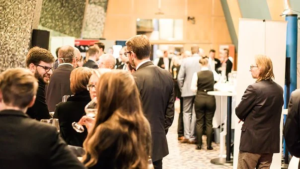
Networking is a major benefit of the TopFuel Conference. The social events help connect conference delegates and are included in the registration fee.

Welcome Reception


Get in touch before the conference starts at the TopFuel 2027 Welcome Reception. 

All delegates are warmly invited to the Welcome Drink on Sunday, 10 October 2027.

Combined with the conference pre-registration, this informal gathering offers an excellent opportunity to meet fellow participants before the scientific programme begins.

Conference Dinner


The TopFuel 2027 conference dinner will take place at the Ballroom of Berns.

The Ballroom was built in 1886 and is one of Sweden’s most historic venues. With a ceiling height of 12 meters and 3 magnificent crystal chandeliers in the ceiling, this salon is completely unique.

The Social Programme is included in the registration for TopFuel 2027 delegates.
Please fill in the relevant sections of the registration form (when available) to confirm your registration for the different parts of the Social Programme.

It is possible to purchase tickets for accompanying persons.

Info Point

TopFuel 2027 – Venue

TopFuel 2027 will take place at the Clarion Hotel Sign in Stockholm, Sweden. 

Clarion Hotel Sign

Östra Järnvägsgatan 35, 111 20 Stockholm, Svezia

Hotel Website

Clarion Hotel Sign is located in central Stockholm next to the Norra Bantorget square near Stockholm Central Station. The hotel offers 558 rooms, and it is well connected to main transport lines (train, shuttle buses, metro). The Clarion Hotel Sign is surrounded by a wide selection of alternative accommodation options, all within easy walking distance of the conference venue.

ABOUT Stockholm

Stockholm, the capital of Sweden, is a vibrant city known for its beautiful waterfront, historic charm, and strong connection to nature. From the cobbled streets of Gamla Stan to its modern architecture and lively cultural scene, the city combines Scandinavian heritage with innovation and sustainability. A leading centre for science, technology, and research, Stockholm offers an inspiring setting for international exchange, making it an ideal host for TopFuel 2027.

VISA

Citizens from countries outside of the Schengen area might need a visa to enter Sweden. Check here if you need a visa. 

Upon request, the European Nuclear Society will prepare a visa invitation letter for delegates whose registration fees were received in full. Unfortunately, we are not in a position to give any further support to the visa application process. Obtaining a visa remains the sole responsibility of the participant. Regular cancellation deadlines apply, regardless of whether your visa was granted or not. 

ORGANISER

European Nuclear Society

Avenue des Arts 56
1000 Brussels
Belgium
Email: conferences@euronuclear.org 

Call for Papers

The TopFuel Call for Papers is now OPEN

TopFuel’s primary objective is to bring together leading international specialists in the field, from operators and engineering companies, designers and manufacturers, research institutes and universities, regulators and technical supporting organizations, to share experiences and advances in nuclear fuel technology, and to use the findings of the latest cutting-edge research to achieve high reliability, performance and safety of nuclear fuels for today and advancing technologies to explore a safe path into the future together.

The TopFuel 2027 Programme Committee is calling for both oral and poster presentations in the following tracks:

  • Track 1. Operation and experience
  1. Fuel operating experience and performance: reliability and leakers, degradation and failures, handling issues, water-side corrosion and hydriding, stress corrosion cracking, fuel assembly and component distortion, poolside examination and hot cell Post-Irradiation Examinations (PIEs);
  2. Fuel assembly repair and reconstitution;
  3. Failed fuel monitoring, water chemistry and corrosion/crud/dose countermeasures;
  4. In-core fuel management: mixed core operation, fuel reload optimization, flexible operation (power manoeuvring and load follow operation), extended operating domain (e.g. extended cycle length and power uprates), and end of reactor life (management of final cycles);
  5. Long-term operation (LTO) and its implications on fuel operation, core design and maintenance (e.g. reduction in neutron fluence to reactor components);
  6. Fuel supply strategy;
  7. Operational data acquisition, automatic analysis and Artificial Intelligence (AI) applications.


  • Track 2. Advances in fuels for water-cooled reactors, including Small Modular Reactors (SMRs)
  1. Fuel assembly design innovations;
  2. Processing and manufacturing, including progress in additive manufacturing;
  3. Cladding and structural materials development; mechanical and corrosion behaviour;
  4. Fuel design improvements to support longer cycles, 5%-10% enrichment, high burnup, fluence reduction and efficient disposal;
  5. Considerations of new operating conditions and environment (such as boron-free, KOH chemistry, coolant thermal hydraulics and power) associated with SMRs;
  6. Experiences with and testing of Advanced Technology Fuel and control rod designs;
  7. In-reactor performance of Advanced Technology Fuels in normal operation and during Anticipated Operational Occurrences (AOOs);
  8. Qualification, licensing, and deployment scenarios for Advanced Technology Fuels;
  9. Economic aspects of Advanced Technology Fuels deployment strategies;
  10. Application of AI in design, materials and manufacturing.


  • Track 3. Advanced Modular Reactor fuel performance demonstration
  1. New fuel concepts (e.g. TRISO fuel, fast reactor fuels and molten salt reactor fuels);
  2. Fuel qualification for advanced reactors;
  3. Fuel performance modelling and safety analyses of fuel for advanced reactors;
  4. Fuel supply chain technical challenges (enrichment, manufacturing, transportation);
  5. Fuel management and core design of advanced reactors.
  • Track 4. Back End: closed fuel cycle, used fuel storage, transportation and re-use
  1. Closed fuel cycles and strategies;
  2. Re-use after transportation/storage;
  3. Interim storage, dry storage, wet storage, and long-term storage strategies (including ATF);
  4. Handling and transportation of damaged, high BU and non-standard fuels (including ATF); handling and treatment of leaking fuel;
  5. Spent fuel safety: R&D activities, ageing issues, criteria and regulations;
  6. Long-term fuel database management.


  • Track 5. Transient fuel behaviour and safety-related issues
  1. Transient fuel behaviour and modelling, including Advanced Technology Fuels (RIA, LOCA, ATWS, PCI/SCC, PCMI, post-CHF, et cetera);
  2. Safety and design criteria including time-at-temperature, Design Extension Conditions (DEC); safety analysis and licensing for current fuel and Advanced Technology Fuels;
  3. Emerging issues related to fuel safety (e.g., fuel behaviour under extended loss of cooling; transient fission gas release; cladding ballooning and burst mechanisms; fuel fragmentation, relocation, and dispersal; long-term coolability; re-criticality);
  4. Quantification and management of margins;
  5. In-pile and out-of-pile test results and analyses.


  • Track 6. Modelling, analysis, and methods
  1. Development, verification, validation, and uncertainty quantification (VVUQ) of fuel performance modelling codes;
  2. Multi-physics multi-scale modelling and validation; water chemistry, corrosion and CRUD modelling;
  3. Validation databases;
  4. Transposition to in-reactor and back-end conditions;
  5. Fuel design and safety analysis methods, including uncertainty analysis;
  6. Data-driven and AI technology applications; Application of AI in fuel performance simulation, including use of surrogates, and coding assistants;
  7. Modelling of Advanced Technology Fuels.


  • Track 7. Innovations for in-reactor fuel testing
  1. Innovative instrumentation and experimental methods;
  2. Innovations in in-reactor fuel material testing;
  3. Development and performance of irradiation rigs specific to fuel;
  4. Qualification, validation, commissioning and uncertainties of testing methods.


Mark your diaries and be a part of it! 

Next steps

Deadlines

Abstract Submission

12 February 2027

Author Notification

12 March 2027

Deadline Full Paper submission

14 May 2027

Deadline Final Full Paper submission (after peer-review)

15 August 2027

Deadline PPT/CV submission 1 October 2027
TopFuel 2027 in Stockholm 10 – 14 October 2027


For abstract submission, please go to the TopFuel 2027 Online Abstract Submission System.

Registration & Fees

Registrations for TopFuel2024 will open during Spring 2027

Sponsors

Interested in becoming a TopFuel 2027 Sponsor? Contact conferences@euronuclear.org