Ansaldo Nucleare and the Life Extension of Cernavodă Unit 1
Securing Romania’s Energy Future
The Cernavodă Nuclear Power Plant, located on the banks of the Danube in Constanța County, is Romania’s only nuclear facility and a cornerstone of the country’s energy system.
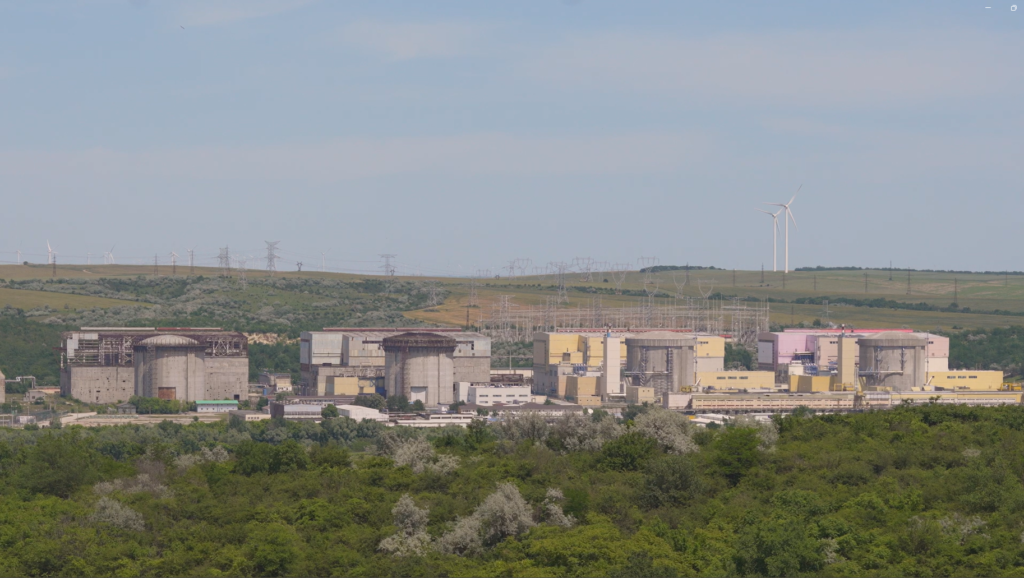
Operated by Nuclearelectrica, the plant currently runs two CANDU-6 pressurised heavy-water reactors, each with a net capacity of 700 MW, together supplying around 20% of Romania’s electricity needs.
Unit 1, the first reactor to enter service, began commercial operation in December 1996, marking a milestone as the first nuclear unit of its kind in Eastern Europe. Unit 2 followed in 2007, further strengthening the plant’s role in the national grid.
Unit 1 is undergoing a major plant life extension project—a full refurbishment that will add 30 years to its operational life, ensuring the delivery of low-carbon, reliable power for decades to come. As Mihai Gioara, Director of Development and Portfolio Management at Nuclearelectrica, explains:
“The refurbishment of Unit 1 represents 50% of SNN’s generation portfolio – and that alone speaks volumes about its importance for the company. At the same time, it is a perfect opportunity to build and strengthen a team fully prepared for all upcoming projects aimed at expanding and maintaining our production capacity: Units 3 and 4, the future refurbishment of Unit 2, and the deployment of SMRs.”
The groundbreaking ceremony for the refurbishment of Cernavodă Unit 1 was held on September 3, 2025. The event marked the official start of civil infrastructure works for the project and was attended by Romanian President Nicușor Dan, ministers, ambassadors from Canada, South Korea, and Italy, as well as representatives of the international consortium, underlining the strategic importance and international scope of the initiative.
The refurbishment is being executed by a consortium led by Ansaldo Nucleare (ENS Corporate Member), in partnership with Candu Energy Inc. (AtkinsRéalis) and KHNP, and includes engineering, procurement, construction, retubing, and the replacement of key components.
Ansaldo Nucleare’s involvement is the result of a long-standing partnership with Nuclearelectrica, built over decades of collaboration and mutual trust. As Gioara further highlights:
“In projects of this magnitude, trusted partners are not just important — they are decisive. Ansaldo Nucleare brings proven engineering expertise, component experience, and decades of collaboration with Cernavodă. Their presence ensures quality execution, reduces technical and schedule risks, and strengthens the confidence of regulators, financiers, and stakeholders. They are more than suppliers; they are partners to success, helping us deliver this project to the highest international standards.”
From a technical perspective, the refurbishment is one of the most complex engineering projects in Romania’s energy sector. Viorel Vasilache, Deputy Director in Operations Direction of the Refurbishment Unit, describes it as follows:
“The refurbishment of Unit 1 is one of the most complex engineering projects in Romania’s energy sector. It involves the replacement or upgrade of thousands of components, strict adherence to nuclear safety standards, and seamless coordination across civil, mechanical, electrical, and regulatory disciplines. It’s not just maintenance — it’s a full-scale life extension that requires precision, international expertise, and flawless execution.”
The environmental impact is equally significant. Since its commercial operation began, Unit 1 has helped Romania avoid approximately 5 million tons of CO₂ emissions annually. The refurbishment will ensure this contribution continues, supporting Romania’s decarbonization goals and reinforcing the country’s energy independence. Extending the life of existing nuclear facilities is also far more cost-effective than building new ones, maximising the value of existing infrastructure.
Looking ahead, the legacy of this project will be profound. As Vasilache notes:
“Extending the life of Unit 1 secures 30 more years of clean, reliable power for Romania, reinforcing energy independence and decarbonization, and it creates a generation of engineers trained in one of the most challenging nuclear projects in Europe. The skills, know-how, and confidence they gain will stay in Romania, positioning our country as a regional hub of nuclear expertise for decades to come.”
“The refurbishment of Unit 1 at Cernavodă is more than a technical renewal—it is a commitment to Romania’s energy independence, climate action, and engineering legacy. Through skilled execution and enduring partnerships, Ansaldo Nucleare and its partners are ensuring clean, reliable, and affordable energy for future generations.”,
commented Daniela Gentile, CEO of Ansaldo Nucleare.
 Nuclearelectrica is also advancing plans to expand the Cernavodă plant with the construction of Units 3 and 4, each with a capacity of 700 MW. These new reactors, based on the same CANDU technology, are expected to double the plant’s output and further increase the share of nuclear energy in Romania’s electricity mix. The engineering, procurement, and construction management contract for Units 3 and 4 was signed in November 2024 with a consortium including Ansaldo Nucleare, Candu Energy Inc. (AtkinsRéalis), Fluor, and Sargent & Lundy, with completion targeted for 2031–2032. Once operational, nuclear energy is projected to provide over 30% of Romania’s electricity and 66% of its clean energy, making a decisive contribution to national decarbonization goals.
This article was written by Ansaldo Nucleare (ENS Corporate Member)
Ansaldo Nucleare has a longstanding cooperation with Nuclearelectrica and the Romanian nuclear industry.
Beyond Cernavoda, the Italian company is a partner in the EAGLES (European Advanced Generation Lead-cooled Energy System) Consortium, with the goal of developing a Generation IV lead-cooled fast reactor, EAGLES-300, by 2039.
Led by Ansaldo Nucleare, RATEN ENEA and SCK CEN (ENS Corporate Member), in 2024 the project was selected by the European Industrial Alliance on SMRs among the most promising initiatives to drive the deployment of next-generation small modular reactors in Europe.
In September 2025, the international pre-licensing initiative for EAGLES-300 was formally launched as the first pilot project of the IAEA’s Nuclear Harmonisation and Standardisation Initiative (NHSI), marking a significant step toward regulatory harmonisation and more efficient cross-border licensing.
EAGLES-300 development will rely on two key facilities: Mol in Belgium, where the LEANDREA technology demonstrator will focus on fuel and materials testing, and Pitești in Romania, where the ALFRED project will serve as a stepping stone toward commercial deployment.