From E&T to Skills Ecosystems
Takeaways on the Evolving Nuclear Workforce from NESTet 2026
From workforce challenges to new training ecosystems, the 2026 edition of the Nuclear Education and Training Conference (NESTet), organised by the European Nuclear Society (ENS) in collaboration with the European Nuclear Education Network (ENEN), brought together experts and stakeholders representing academia, industry and international organisations in Brussels to discuss how to strengthen workforce attraction, development, and retention, and how Europe can secure the skills needed for the future of nuclear energy.
Held from 2 to 4 March 2026, the conference underlined that nuclear education and training are increasingly recognised as strategic priorities for the sector. Through three days of discussions, presentations and workshops, participants shared a common message: if Europe wants to maintain and expand nuclear expertise, it must do more than train people. It must attract talent earlier, connect education more closely with workplace needs, recognise skills more consistently, and develop learning pathways that remain coherent over time.
This perspective was particularly visible during the conference opening sessions and Tuesday’s symposium on talent attraction, skills recognition and career development.
Setting the scene: workforce development as a European common challenge
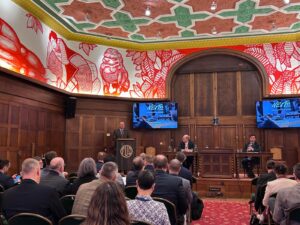
Domenico Rossetti di Valdalbero, Directorate-General for Research and Innovation (DG RTD), on stage.
The opening plenary on Monday set the tone by framing workforce development as a European challenge affecting the entire nuclear landscape. Keynote presentations from Brian Eriksen (European Commission’s Joint Research Centre – JRC) and Domenico Rossetti di Valdalbero (Directorate-General for Research and Innovation (DG RTD) highlighted the scale and diversity of the nuclear workforce in Europe and the importance of better understanding future demand and skills profiles. In addition to that, the sector must consider that a significant share of the nuclear workforce does not come from strictly “nuclear-only” backgrounds. This makes skills mapping, reskilling and cross-sector mobility increasingly important to maintain a sustainable pipeline of expertise.
The session also emphasised the growing importance of international cooperation in education and training. Contributions from Tatiana Ivanova (OECD Nuclear Energy Agency (OECD/NEA), Pedro Dieguez Porras (International Atomic Energy Agency (IAEA) and Jerry Hopwood (UNENE) showed how education and training initiatives are increasingly developed through partnerships linking universities, research organisations and industry stakeholders, rather than through isolated projects.
Several contributions also highlighted the need for stronger coordination between academic curricula, vocational training and industrial needs. Among them, the recent Skills4Nuclear initiative presented its goal to build a long-term collaborative framework addressing workforce shortages, attractiveness and strategic skills development at the European level. Discussions around the concept of “skills ecosystems” further stressed that the main challenge lies not only in training capacity, but also in the fragmentation of existing programmes and the lack of shared competence pathways across the sector.
Securing the workforce of tomorrow
Tuesday’s Symposium, titled “Securing the workforce of tomorrow: Talent Attraction, Skills Recognition and Career Development” and moderated by Eileen Langegger (ENS), explored how these strategic reflections can translate into concrete workforce solutions.
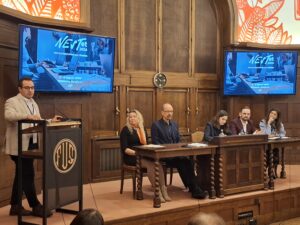
Symposium Opening Session: “Industry Needs, Talent Availability and Training Pathways”
The Opening Session: “Industry Needs, Talent Availability and Training Pathways”, introduced by an inspiring overview of the realities of today’s talent market provided by Callum Thomas (Thomas Thor*) hosted on stage industry and HR leaders from different countries and nuclear fields: Camilla Fiedler-Blackhammar (Vattenfall*, Sweden), Tobias Unfried (NUKEM Technologies*, Germany), Juha Poikola (TVO*, Finland) and Cecile Maggio (Framatome*, France). Speakers highlighted that the nuclear sector now operates in a highly competitive labour environment, where visibility, employer image and clear career opportunities, alongside flexibility and quick adaptation, are increasingly important for attracting young professionals, promoting effective retention. Finally, Carlos Vazquez Rodriguez (Chair of the ENS Young Generation Network) shared some reflections from the early career community, highlighting the importance of knowledge transfer for the young generation, while stressing how data, positive storytelling and messages play an important role in attracting new talents
The following session, “Attracting & Developing the Nuclear Workforce”, presented national and institutional initiatives aimed at strengthening the workforce pipeline. Examples included initiatives from the Dutch Nuclear Academy, the Université des Métiers du Nucléaire (UMN) in France, the National Skills Academy for Nuclear (NSAN) in the United Kingdom, as well as strategy and policy perspectives from a new-to-nuclear country like Poland.
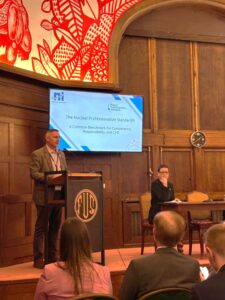
Robert Gofton and Cynthia Hearing presenting the NI Nuclear Professionalism Standard (Nuclear Institute, ENS Member Society)
These examples illustrated how different countries are addressing growing recruitment needs and adapting their education and training systems to support future nuclear programmes, expanding or starting new ones. Discussions also emphasised the importance of aligning training programmes with industrial demand and strengthening collaboration between education providers, industry and public authorities. In several cases, new nuclear projects and long-term energy strategies are already placing additional pressure on education and training systems.
Another key topic addressed during the final session, “Nuclearisation & Certification: Keys to Access and Mobility”, was the recognition and transferability of skills. Several initiatives presented by organisations such as the International Institute of Nuclear Energy (I2EN), the Nuclear Institute (ENS Member Society), Politecnico di Milano and Bilfinger Nuclear, aim to improve transparency in competence frameworks, develop certification systems, provide corporate high-level education, and strengthen continuing professional development across the sector.
Such approaches are considered essential for better connecting education outcomes with workplace expectations and for providing clearer career pathways for nuclear professionals.
Two parallel workshops concluded the second day:
- The first one, led by the European Commission Joint Research Centre, explored how stronger connections between Communities of Practice can contribute to building a coherent nuclear skills ecosystem. Discussions focused on the role of Vocational Education and Training (VET) and Continuing Professional Development (CPD) in supporting long-term workforce sustainability, highlighting the need to better align existing initiatives and national experiences.
 In parallel, the Cross-YGN workshop brought the perspective of young professionals (ENS Young Generation Network, Fusenet Student Council, International Radiation Protection-YGN, EFOMP Early Careers Group) from across nuclear disciplines. Through interactive discussions and case-based exercises, participants reflected on how nuclear education, training pathways, and early-career development have evolved over the past decade. The exchanges highlighted changing expectations among younger professionals, the growing role of new learning tools and collaborative environments, and the importance of adapting training approaches to ensure the sector remains attractive, accessible, and responsive to the needs of the future nuclear workforce.
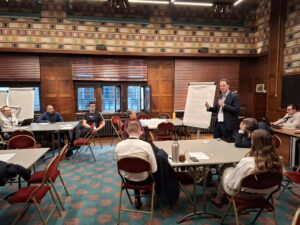 In parallel, the Cross-YGN workshop brought the perspective of young professionals (ENS Young Generation Network, Fusenet Student Council, International Radiation Protection-YGN, EFOMP Early Careers Group) from across nuclear disciplines. Through interactive discussions and case-based exercises, participants reflected on how nuclear education, training pathways, and early-career development have evolved over the past decade. The exchanges highlighted changing expectations among younger professionals, the growing role of new learning tools and collaborative environments, and the importance of adapting training approaches to ensure the sector remains attractive, accessible, and responsive to the needs of the future nuclear workforce.
Innovations in nuclear education and training
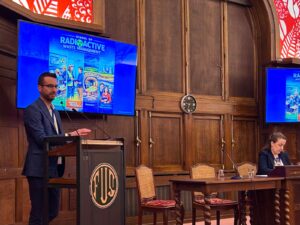 Alongside the plenary sessions and symposium discussions, the conference programme also featured numerous parallel sessions exploring innovations in nuclear education and training.
Topics included digital learning tools, artificial intelligence in training, immersive learning environments such as virtual reality, and hands-on experimental platforms supporting practical education in nuclear science and engineering. Other presentations focused on mentoring and mobility programmes for early-career professionals, best practices and success stories in attracting, developing, and retaining talent, and international education networks promoting collaboration across Europe
Building a sustainable skills ecosystem
NESTet 2026 highlighted that the nuclear workforce challenge is not only about numbers. It is also about ensuring greater coherence between education and employment, between national initiatives and European frameworks, and between technical knowledge and the broader professional skills needed for the future.
By bringing together stakeholders from academia, industry, research organisations and international institutions, the conference demonstrated how the nuclear community is working collectively to build a stronger and more sustainable skills ecosystem capable of supporting Europe’s nuclear ambitions in the decades ahead.